

In the high-speed world of PET blow moulding, even a fraction of a millimetre can be the difference between a premium product and a pile of scrap. Whether you are producing for the beverage, pharmaceutical, or FMCG sectors, bottle defects are more than just an aesthetic nuisance—they are a direct hit to your ROI, leading to production downtime, material waste, and potential supply chain failures.
At Awanti Polymoulds, we believe that most production “nightmares” don’t start at the blowing machine—they start with the engineering of the mould itself.
Here is a troubleshooting guide to the most common PET bottle defects and how precision mould engineering prevents them.
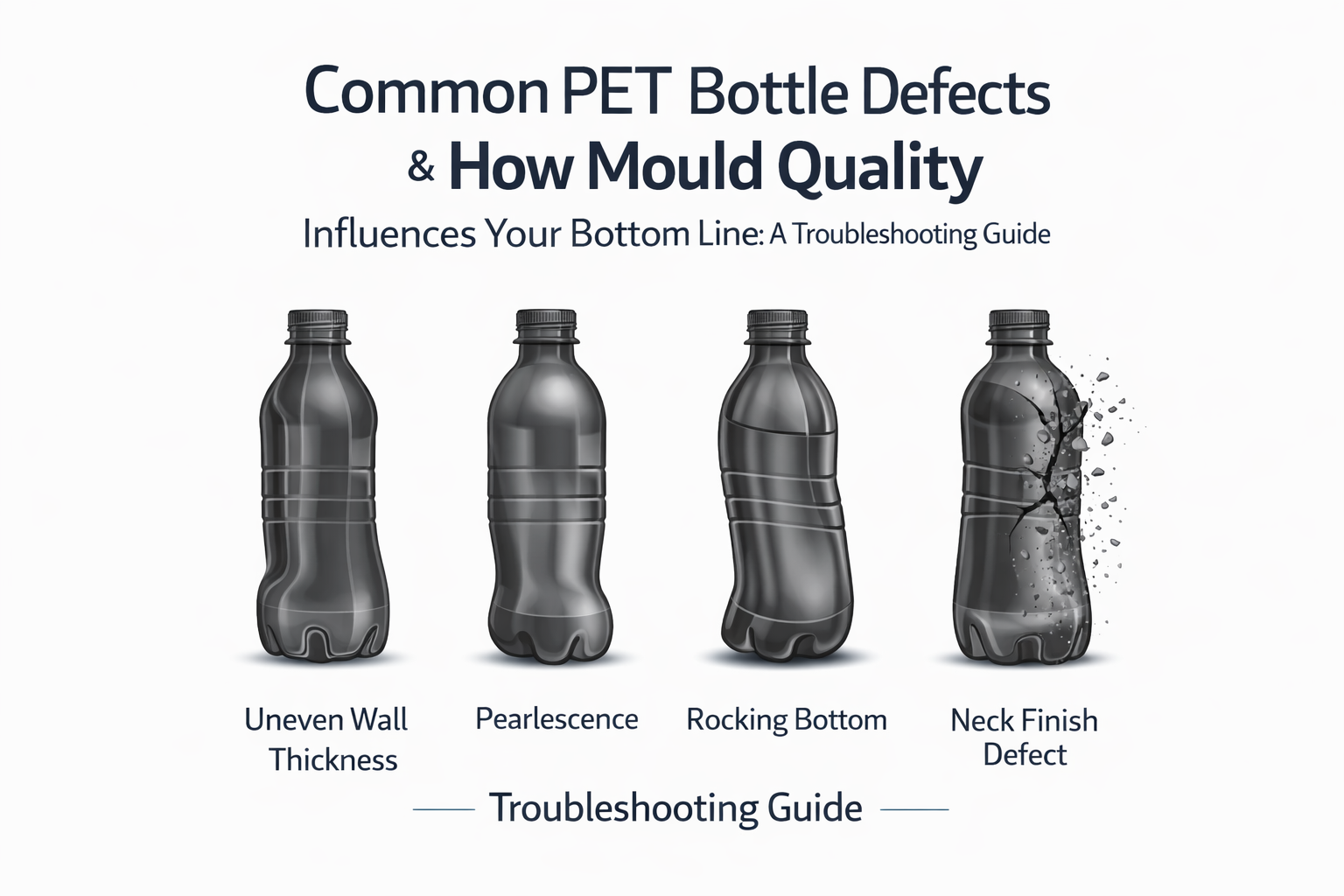
1. Uneven Wall Thickness (Material Mal-distribution)
- The Defect: One side of the bottle is paper-thin while the other is excessively thick. This leads to "clapping" or bursting under pressure.
- The Mould Factor: This is often caused by poor thermal management or misalignment. If the mould’s cooling channels are not precisely engineered, the preform heats or cools unevenly.
- The Awanti Edge: We utilise advanced thermal simulation software to design cooling circuits that ensure uniform temperature distribution. Our CNC-machined moulds guarantee perfect axial alignment, ensuring the stretch rod and preform stay perfectly centred in every cycle.
2. Base Clearance Issues & "Rocking" Bottoms
- The Defect: The bottle fails to stand straight on the conveyor belt or store shelf because the base has slumped or "petals" haven't formed correctly.
- The Mould Factor: This usually points to inadequate cooling at the base or a poorly designed "base-cup" geometry. If the base remains too hot when the bottle is ejected, the internal pressure causes it to bulge.
- The Awanti Edge: Our base designs feature optimised cooling vents and high-grade materials, delivering superior heat transfer coefficients. This allows for rapid solidification of the base, ensuring every bottle has a flat, stable standing surface even at high production speeds.
3. "Pearlescence" (Over-stretching)
- The Defect: A cloudy, white, or opaque appearance on the bottle surface, indicating that the PET material has been stretched beyond its natural limit.
- The Mould Factor: This occurs when the mould cavity dimensions or the blowing profile aren't optimised for the specific preform being used
- The Awanti Edge: We provide comprehensive Preform-to-Bottle Design Services. By calculating the exact stretch ratios before the mould is even manufactured, we ensure the material is distributed efficiently, preventing stress whitening and saving on resin costs through "lightweighting."
4. Poor Neck Finish & Leaks
- The Defect: The cap doesn't fit securely, or there is visible distortion around the neck (the "finish"), leading to leaks and loss of carbonation.
- The Mould Factor: The neck area is the most sensitive part of the mould. Poorly machined neck rings or wear-and-tear on low-quality steel can lead to dimensional inaccuracies.
- The Awanti Edge: Awanti uses premium-grade, hardened stainless steel for neck rings and high-wear components. Our high-precision machining ensures tolerances within microns, guaranteeing a leak-proof seal for every bottle, from the first to the millionth.
Why Engineering Excellence Matters
In an era where sustainability and cost-optimisation are paramount, you cannot afford “average” tooling. A high-quality mould from Awanti Polymoulds acts as a safeguard for your production line.
How do we prevent production failures?
- Material Integrity: We use only certified, high-grade alloys that resist corrosion and wear.
- Prototyping & Pilot Testing: We don't just ship moulds; we validate designs through rigorous pilot testing to ensure they meet your specific blowing machine parameters (Sidel, Krones, KHS, etc.).
- Global Standards: Serving clients in over 20 countries, our engineering team stays ahead of global trends like PET (Recycled PET) processing and Tethered Cap regulations.
Ready to optimise your production?
Contact the experts at Awanti Polymoulds today to discuss your next packaging project.