

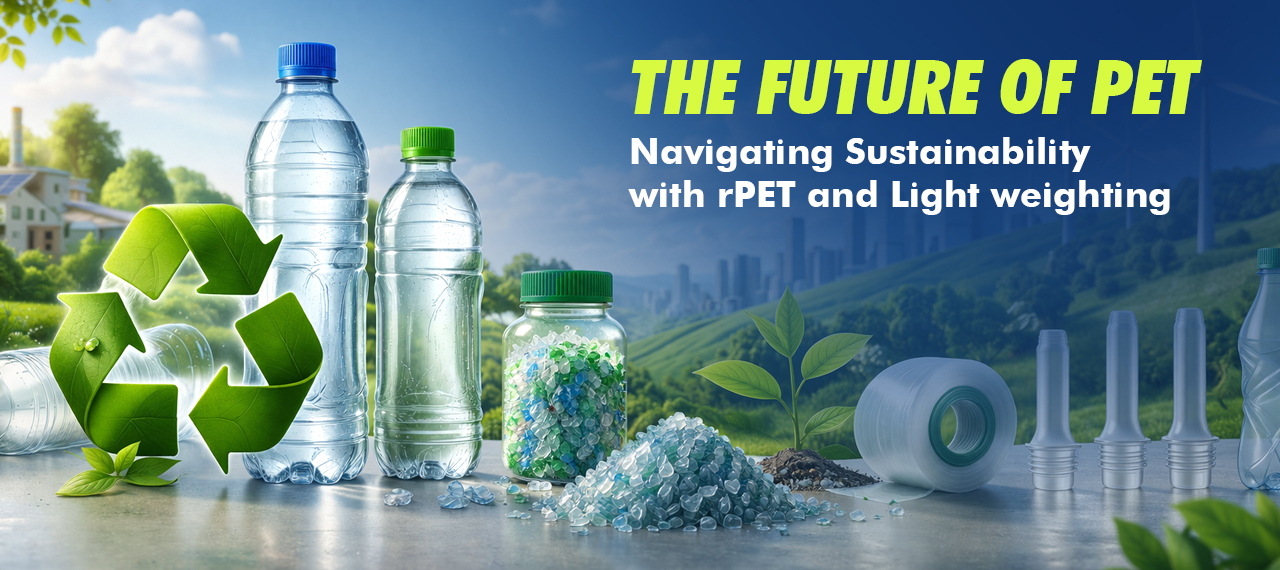
The demand for sustainable PET packaging in India is rapidly increasing as brands shift toward eco-friendly solutions. In this transformation, rPET bottle manufacturing and PET bottle light weighting are emerging as the most effective strategies to reduce plastic usage and meet sustainability goals.
At Awanti Polymoulds, we are at the forefront of this revolution, engineering high-precision moulds that bridge the gap between “green” goals and industrial performance.
1. The Rise of rPET: Designing Moulds for Recycled Polyester
The move toward a circular economy has made rPET bottle manufacturing a top priority for global beverage brands. However, switching from virgin resin to recycled content isn’t as simple as changing the raw material. It presents unique recycled PET challenges that require specialised mould engineering.
Key Challenges in rPET Processing:
- Viscosity Variances: Recycled flakes often have inconsistent Intrinsic Viscosity (IV) compared to virgin PET, affecting material flow.
- Thermal Sensitivity: rPET can absorb heat differently, leading to potential "yellowing" or uneven wall thickness if the cooling system isn't optimised.
- Impurity Build-Up: Higher recycled content can lead to faster wear on mould surfaces due to trace contaminants.
How Awanti Solves These:
Our rPET-ready moulds feature advanced cooling channel designs and specialized surface coatings. By using high-grade hardened steel and precision CNC machining, we ensure that our moulds maintain structural integrity even when processing the more abrasive characteristics of recycled resins.
2. PET Bottle Light weighting: How to Reduce Plastic without Compromising Strength
PET bottle lightweighting is perhaps the most effective way to reduce a brand’s carbon footprint and resin costs simultaneously. The goal is “downgauging”—using less plastic while ensuring the bottle doesn’t collapse during filling, stacking, or transportation.
Strategies for Effective Lightweighting:
- Perform Optimisation: The journey starts here. By redesigning the preform, we can achieve better stretch ratios, ensuring the material is distributed exactly where it’s needed.
- Base & Neck Redesign: The neck and base are often the heaviest parts of a bottle. Transitioning to shorter neck finishes (like moving from PCO 1881 to 26/22) can save grams of plastic per unit.
- Structural Ribbing: Our design team uses CAD/CAM simulation to add strategic "ribs" to the bottle body, providing 360-degree strength with thinner walls.
The Result: Significant resin savings that can reach up to 10–15%, directly impacting your bottom line and sustainability metrics.
Why Partner with Awanti Polymoulds?
As a leading PET mould manufacturer in India, Awanti Polymoulds combines 30+ years of expertise with state-of-the-art technology. We don’t just provide a mould; we provide a sustainable packaging strategy.
- Precision Engineering: Micron-level accuracy for high-speed blowing lines.
- Global Standards: Trusted by brands like Coca-Cola, Bisleri, and Parle.
- In-house Testing: Over 15 different quality tests, including stress crack analysis and thermal expansion, to ensure your sustainable bottles perform in the real world.
Ready to Optimise Your Production?
Whether you are looking to integrate rPET into your supply chain or need an expert in sustainable bottle design, our team is ready to help.
Contact Awanti Polymoulds Today to explore our precision-engineered solutions for the future of PET.
FAQs on rPET & Lightweighting
rPET (Recycled Polyethylene Terephthalate) is plastic that has been collected, cleaned, and reprocessed from used PET products like bottles and containers. In rPET bottle manufacturing, this recycled material is used to produce new bottles, helping reduce dependence on virgin plastic and supporting a circular economy. It plays a key role in sustainable PET packaging in India.
Yes, rPET is safe for packaging when processed under proper regulatory standards. Food-grade rPET undergoes strict decontamination and quality checks to ensure it meets safety requirements. Many global brands use rPET for beverage packaging, making it a reliable solution for eco-friendly bottle design and sustainable packaging.
PET bottle lightweighting reduces the amount of plastic used in each bottle without compromising strength. This directly lowers raw material consumption, reduces transportation costs, and improves production efficiency. For manufacturers, lightweighting can lead to 10–15% cost savings, while also helping meet sustainability goals by reducing plastic waste.
Recycled PET processing comes with several technical challenges, including:
- Variations in material viscosity affecting flow and consistency
- Thermal sensitivity leading to discoloration or uneven thickness
- Presence of impurities causing mould wear and maintenance issues
These challenges make it essential to use high-quality PET moulds and precision engineering, especially when working with high percentages of recycled content.